Surprisingly, certain low speed skills can be quite tricky. You need to drive slowly to park, turn sharply, back up or move forward in traffic jams.
Low speed manoeuvring
To drive slowly in an automatic-transmission vehicle, rest your foot on the brake and let the idling speed of the engine move the vehicle, braking as necessary to control the speed.
In a manual-transmission vehicle, you control very low speeds almost entirely with the clutch. Accelerate as for a normal start and hold your engine speed constant. Raise the clutch to the point at which the engine engages with the drive wheels, and stop. Then, ease the clutch up a small amount to move the vehicle. To gain speed, ease the clutch up a little more. To slow the vehicle, push the clutch down a small amount until the engine is again disengaged from the drive wheels.
If the vehicle is on a slope and/or is moving faster than you wish, declutch and brake gently.
Backing
You might think that being good at backing isn't important. However, collisions while backing are among the most frequent type of collision. This is due, in part, to drivers who believe that a low-speed activity such as backing is no problem.

Best practices for safe backing
- Check your surroundings:
- Always check behind your vehicle before backing up.
- Children, pets, bicycles, wagons, etc., aren't always visible from inside your vehicle.
- Make sure the path is clear before you start backing up.
- Prepare your vehicle:
- All backing manoeuvres should begin with the vehicle straight and the front wheels straight.
- Adjust your mirrors and ensure your backup camera (if equipped) is clean and operational.
- Using the backup camera:
- Check all angles — while backup cameras are helpful, they don't capture everything. Always turn your head to look out the rear window and check in all directions.
- Mirrors and camera — use your mirrors in conjunction with the backup camera to get a comprehensive view of your surroundings.
- Proper positioning for backing:
- From your normal seating position, shift your weight so that you're resting on your right hip.
- Support yourself by placing your right arm along the armrest or the top of the front passenger seat.
- Grasp the top centre (12 o'clock position) of the steering wheel with your left hand.
- Starting to back up:
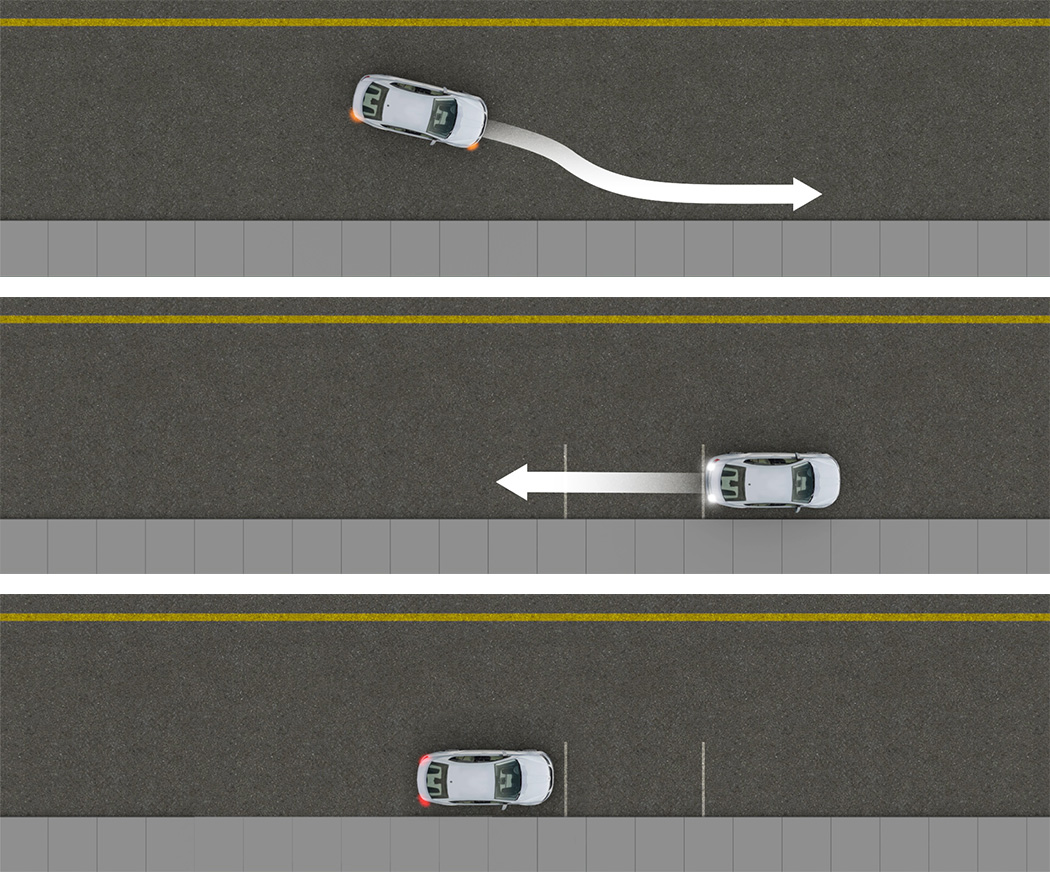
- While looking out the rear window, begin backing slowly in a straight line. Within the first foot or so of vehicle movement, check forward. If the front of the vehicle is moving straight back, your front wheels are straight. If the front of the vehicle swings to the left or right, your wheels are not straight.
- If the front of your vehicle swings to the left, turn your steering wheel to the left to straighten. If the front swings to the right, turn your steering wheel to the right to straighten. Once you get the wheels straight, move your grip to the new 12 o'clock position.
- Having done this, you know that every time your hand is at 12 o'clock, your front wheels are straight.
- Focus and control:
- Look through the rear window and focus your eyes well back along the path you want to go.
- Move the vehicle slowly backward. Look and steer where you want to go.
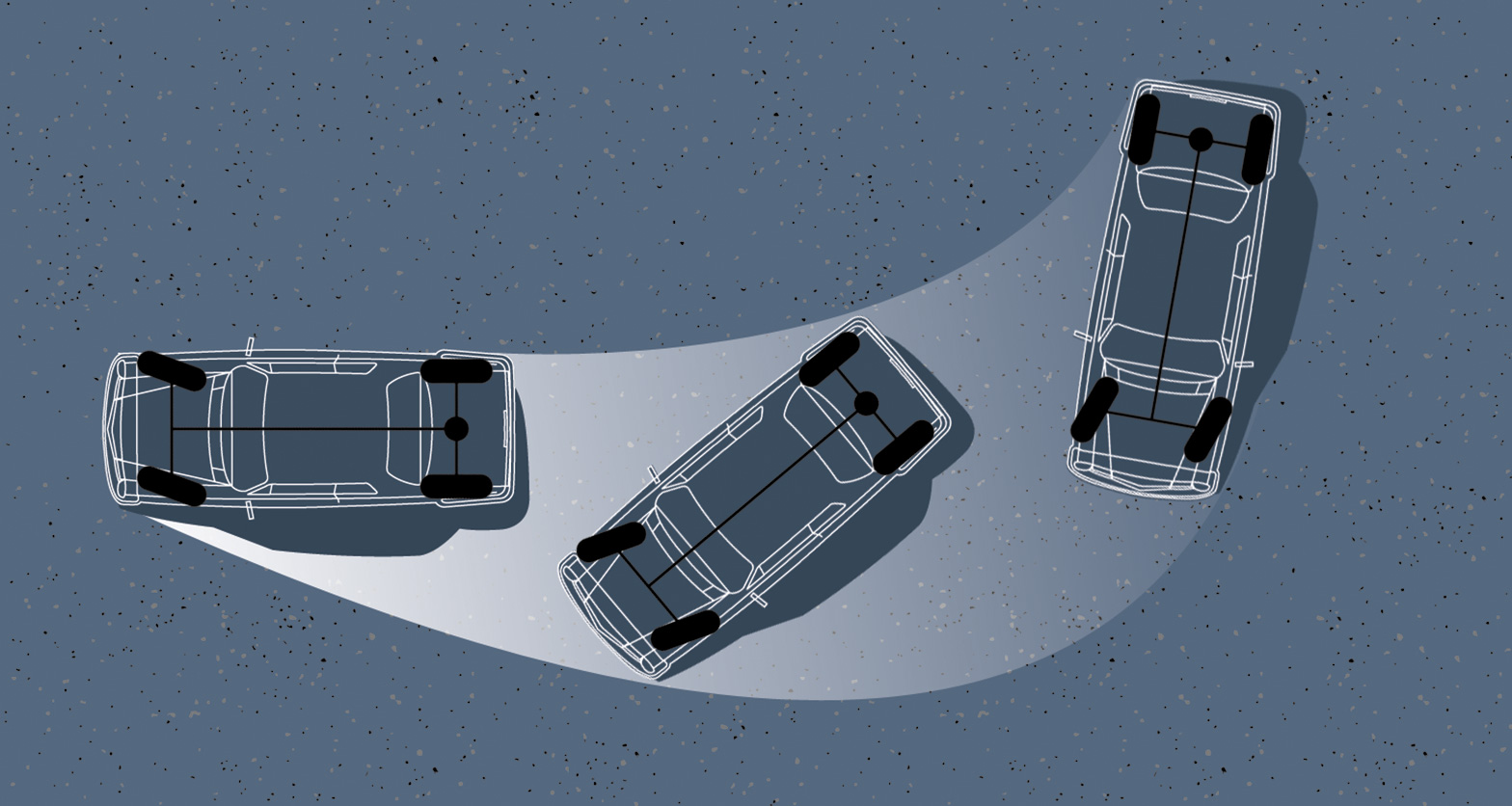
- You'll notice that the vehicle turns much more when you are backing because the front wheels are pivoting, or swinging, around the rear wheels. This is called 'front end swing' and is the cause of many backing collisions.
Additional tips for using technology
- Backup sensors: Many vehicles are equipped with backup sensors that alert you if you're getting to close to an object. Pay attention to these alerts but do not rely solely on them.
- 360-degree cameras: Some vehicles offer a 360-degree view, which can provide a better overall perspective. Use this feature to enhance your situational awareness.
- Blind spot monitoring: Utilize any blind spot monitoring systems to assist in detecting vehicles or objects that you might not see when backing up.
By combining these techniques with proper visual search patterns and cautious driving, you can significantly reduce the risk of collisions while backing up. Remember, technology is there to assist you, but your primary focus should always be on visually confirming your surroundings and backing up safely.
Steering techniques for backing
- Hand over hand and hand-to-hand
Shift your weight slightly onto your right hip, grasp the steering wheel with both hands and use the hand over hand method to turn the steering wheel. While this method provides good steering control, it limits your ability to see out the back window. For the hand-to-hand method, refer to Steering. - Palming (precision backing technique)
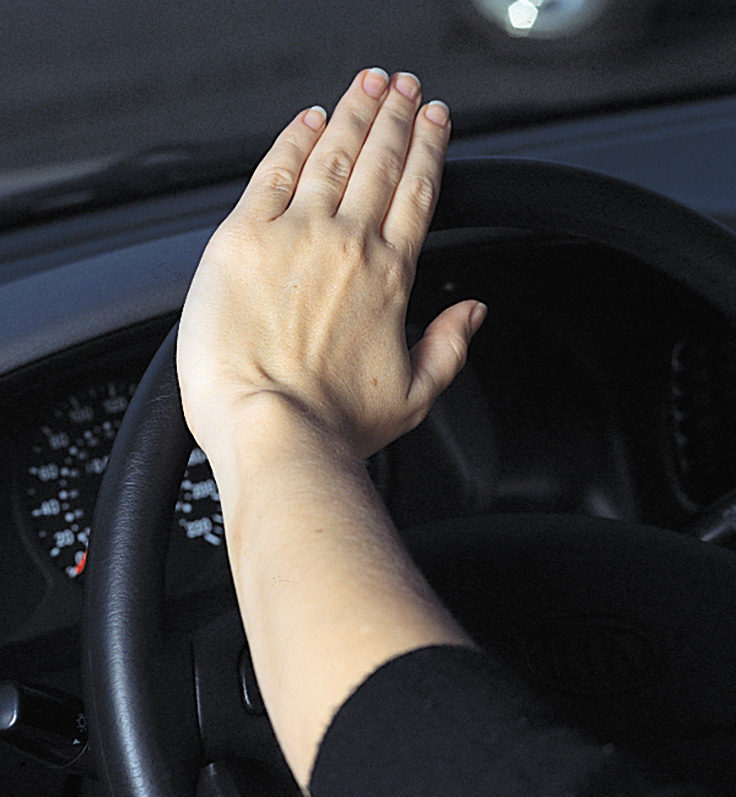
Palming is an advanced steering technique that's only used when backing. It's used in situations where both straight line backing and sharp turning are required. This method allows you to turn the wheel sharply while ensuring that your front wheels will be straight when your hand is at 12 o'clock.
Put your left hand at the 12 o'clock position but do not grasp the wheel. Instead, push your palm against the rim of the wheel with enough pressure so that when you move your hand down and around, the wheel turns, put your palm stays on the same place on the wheel rim.